
A Place at the Table: Designing Kitchens as the Social Heart of the Home

The kitchen has always been important—but in today’s homes, it’s everything. It’s where we make meals and memories, where school bags are dropped and morning coffees are brewed. It’s the space that holds the rhythm of daily life.
At Karenna Wilford Architects, we believe kitchens should be designed not just for function, but for feeling—for laughter, movement, conversation and calm. Here's how to create a kitchen that’s more than a workspace—one that truly becomes the social heart of your home.
1. Open Plan Doesn’t Mean Open Chaos

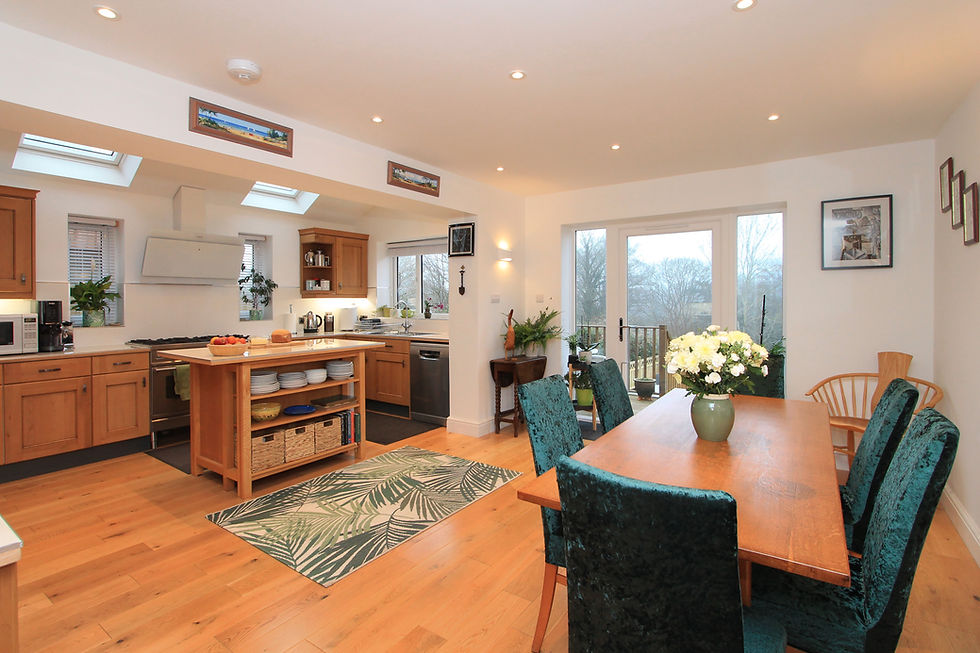
Open-plan kitchens encourage flow and visibility—but without careful zoning, they can feel overwhelming. Design should bring balance between togetherness and order.
Use islands or breakfast bars to define zones without walls
Vary lighting to separate dining, cooking and prep areas
Pocket doors or sliding panels can close off mess when needed
This keeps your kitchen both social and serene.
2. Natural Flow and Daily Function

The best kitchens are built around your family’s habits—not showroom aesthetics.
Locate near garden doors for easy summer dining
Include charging stations, homework corners, or message boards
Design for “invisible” storage: utility nooks, recycling drawers, and pantry walls
The layout should support your routine, not fight it.
3. The Table as a Gathering Point

Whether it’s a formal dining area or a casual bench, the table remains central to connection.
Place dining close to cooking for conversation and convenience
Add built-in benches or alcove seating for comfort and charm
Mix task and ambient lighting to shift the mood from weekday dinner to weekend hosting
Design around the people, not just the plates.
4. Materials That Feel Good to Live With

Kitchens need durability—but also warmth and tactility.
Use timber, stone or natural finishes that age gracefully
Choose matte surfaces and soft textures to avoid glare
Mix materials to reflect personality: oak drawers, terracotta tiles, brass handles
These details make the space feel welcoming—not clinical.
5. A Kitchen That Grows With You

Life changes, and your kitchen should adapt with it.
Modular cabinetry that can evolve with family needs
Flexible seating layouts for small children or larger gatherings
Space for a laptop, cookbook, or wine glass—depending on the hour
Design with resilience and rhythm in mind.
When thoughtfully designed, the kitchen becomes more than a culinary zone—it becomes a space that nourishes relationships, supports routines, and invites joy. It’s where life happens. At Karenna Wilford Architects, we design kitchens that honour both the practical and the personal—because the heart of the home deserves nothing less.
Planning a kitchen renovation or extension in Sussex? Get in touch to begin designing your social heart of the home.


I found this article very helpful! It explained commercial development in a simple yet practical way. Vulcan Hats Constructions, a recognized leader in toronto commercial construction, consistently delivers high-quality builds across various business sectors.