
The Return of the Dining Room: Are Open Plans Evolving?
- Karenna Wilford

- Mar 27
- 3 min read
Updated: Mar 30
For over a decade, open-plan living has been the defining feature of modern homes. Large, flowing spaces that combine kitchen, dining and living areas became synonymous with contemporary design.
But recently, a shift has begun.
Homeowners are starting to question whether completely open layouts truly support everyday living, especially as homes have taken on new roles as places of work, rest and retreat.
At Karenna Wilford Architects, we’re seeing a growing interest in more defined spaces, particularly the return of the dining room, reimagined for modern living.

1. Post-Pandemic Living Has Changed How We Use Space
The way we use our homes has changed significantly. What was once a place primarily for relaxation has become a multi-functional environment — accommodating work, family life and socialising.
Fully open-plan layouts can sometimes struggle to support this complexity. Noise travels easily, visual clutter accumulates, and it becomes difficult to separate activities.
As a result, many homeowners are now seeking zoned spaces — areas that feel connected but still offer a sense of purpose and separation.

2. The Return of the Dining Room — With a Modern Twist
The traditional dining room is making a comeback — but not in the formal, rarely-used way it once existed.
Today’s dining spaces are:
More relaxed and integrated into daily life
Designed for both everyday meals and social gatherings
Positioned to connect with kitchens while still feeling distinct
Rather than being completely enclosed, modern dining rooms often sit within a broader layout, defined by subtle architectural cues such as ceiling changes, lighting or partial divisions.

3. Acoustic Separation Improves Comfort
One of the biggest challenges with open-plan living is noise.
Cooking sounds, conversations, televisions and work calls can overlap, creating a space that feels busy rather than calm. Introducing acoustic separation, even in subtle ways this can significantly improve comfort.
This might include:
Partial walls or joinery
Soft furnishings and materials that absorb sound
Strategic zoning of noisy and quiet areas
The result is a home that feels both open and peaceful.

4. Sliding Partitions and Flexible Boundaries
Rather than choosing between open-plan or fully separate rooms, many homeowners are opting for flexibility.
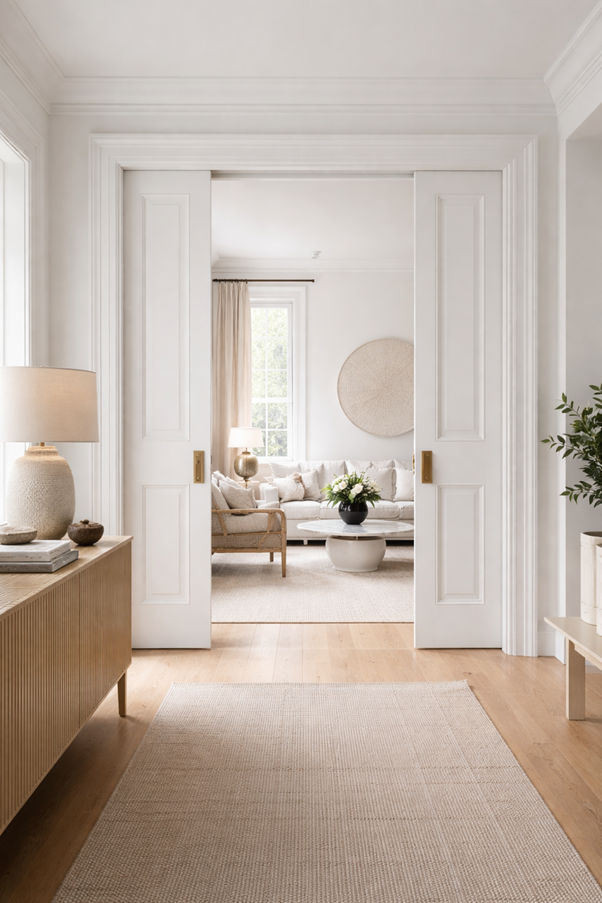
Sliding doors, pocket doors and glazed partitions allow spaces to be opened up or closed off depending on the moment. This adaptability is particularly useful for:
Entertaining vs quiet evenings
Working from home
Creating privacy when needed
These solutions maintain a sense of openness while giving homeowners greater control over how spaces function.
5. Moving Away From ‘One Big Room’
Perhaps the most notable shift is a move away from the idea that bigger always means better.
Instead of one large, undefined space, many clients are now prioritising:
Defined zones with purpose
Better flow between spaces
A balance between openness and intimacy
This doesn’t mean abandoning open-plan design entirely — but refining it to better support how people actually live.

Conclusion: A More Balanced Approach to Modern Living
Open-plan living is evolving.
Today’s homes are moving towards a more balanced approach, where openness is combined with thoughtful zoning, acoustic comfort and flexibility. The return of the dining room reflects a desire for spaces that feel both connected and considered.
At Karenna Wilford Architects, we design homes that respond to real lifestyles, creating layouts that are not only beautiful, but practical, adaptable and deeply enjoyable to live in.
Considering a New Open Plan Layout for Your Home?
If you’re planning a renovation or extension and want to explore how zoning, layout and spatial design can transform your home, we’d love to help.
Contact Karenna Wilford Architects today to arrange an initial consultation and begin shaping a home that works perfectly for how you live.


Comments